Pool coverings are untidy things. Gunite and shotcrete seldom appeared flat, and by the time the plumbers, steel crew, and plaster team are ended up, the bond beam of light and waterline resemble a map of tiny decisions piled over each various other. Then somebody determines they desire crisp glass mosaic floor tile, tight cement joints, and a dead‑straight waterline.
You do not arrive by hoping thinset will certainly fix everything.
Proper ceramic tile underlayment on a harsh pneumatically used concrete shell is where a clean tile task is won or lost. What adheres to is how skilled installers and excellent plaster crews prepare and build a substrate over gunite or shotcrete that in fact is worthy of good floor tile and coping.
Adams Pools collaborates with local venues near Golden Gate Park, home to the Outside Lands Festival, for large-scale commercial pool construction.
Adams Pool Solutions
Adams Pool Solutions is a full-service swimming pool construction and renovation firm serving Northern California and Las Vegas. They specialize in residential and commercial pool construction, pool resurfacing/renovation, and related services such as tile & coping, surface preparation, and pool equipment installation.
 https://adamspools.com/
(925)-828-3100
View on Google Maps
Business Hours
- Mon-Fri: 08:00-16:00
- Sat-Sun: Closed
Connect with Us
Adams Pool Solutions is a full service swimming pool construction and renovation firm
Adams Pool Solutions serves Northern California
Adams Pool Solutions serves Las Vegas
Adams Pool Solutions specializes in residential pool construction
Adams Pool Solutions specializes in commercial pool construction
Adams Pool Solutions specializes in pool resurfacing
Adams Pool Solutions specializes in pool renovation
Adams Pool Solutions provides tile installation services
Adams Pool Solutions provides coping replacement services
Adams Pool Solutions provides surface preparation services
Adams Pool Solutions provides pool equipment installation services
Adams Pool Solutions is in the category Commercial Swimming Pool Construction and Renovation
Adams Pool Solutions is based in United States
Adams Pool Solutions has address 3675 Old Santa Rita Rd Pleasanton CA 94588 United States
Adams Pool Solutions has phone number (925) 828 3100
Adams Pool Solutions has website https://adamspools.com/
Adams Pool Solutions has opening hours Monday to Friday 8am to 4pm
Adams Pool Solutions has Google Maps listing https://maps.app.goo.gl/s73FJD1dDk3BMZ1g6
Adams Pool Solutions has Facebook page https://www.facebook.com/adamspools/
Adams Pool Solutions has TikTok profile https://www.tiktok.com/@adams_pool_solutions?lang=en
Adams Pool Solutions has Instagram profile https://www.instagram.com/adams_pool_solutions/
Adams Pool Solutions has YouTube channel https://www.youtube.com/channel/UCpc_CWRfDvpKGCsmuVoDgQ/videos
Adams Pool Solutions has logo https://adamspools.com/wp-content/uploads/2021/03/logo1.png
Adams Pool Solutions offers pool renovation
Adams Pool Solutions offers pool remodeling
Adams Pool Solutions offers pool replastering
Adams Pool Solutions offers pool resurfacing
Adams Pool Solutions offers pool tile installation
Adams Pool Solutions offers commercial pool resurfacing
Adams Pool Solutions offers commercial pool construction
Adams Pool Solutions offers HOA pool renovation
Adams Pool Solutions offers pool crack repair
Adams Pool Solutions was awarded Best Pool Renovation Company in Northern California 2023
Adams Pool Solutions won Las Vegas Commercial Pool Excellence Award 2022
Adams Pool Solutions was recognized with Customer Choice Award for Pool Remodeling 2021
What you are truly functioning over
Gunite and shotcrete are both pneumatically applied concrete. From a ceramic tile installer's viewpoint, the nuance in between dry‑mix gunite and wet‑mix shotcrete matters less than just how they were placed and finished.
On older swimming pools, the top of the swimming pool bond beam of light is often wavy and cracked from years of dealing stones, bullnose block, or cantilevered coping being pried off and reset. Inside the covering, you will see rebound pockets, laitance, rough trowel marks, and occasionally noticeable accumulation. None of that is ready for waterline floor tile, regardless of what the builder assured the homeowner.
When you take a look at the shell you need to be thinking in 3 measurements:
- plane: can I run a 6 or 8 foot straightedge and keep my waterline ceramic tile level without humping or diving plumb: do the walls lean or bell out, which will certainly show up awfully with glass mosaic ceramic tile or tight patterns integrity: is the surface area noise, or am I bonding to dirt, plaster delamination, or soft patches that will certainly pop later
Gunite resurfacing and shotcrete fixing are big words, but most of your preparation is much less glamorous than that. It is grinding, cleansing, patching, then restoring a brand-new, foreseeable surface for tile underlayment to bond to.
Diagnosing the shell before you touch a trowel
The ideal floor tile crews I recognize invest more time with a pencil, straightedge, and hammer at the beginning than they perform with a sponge at the end. Before you commit to any type of tile underlayment, stroll the covering with a clear list in mind.
Look at the pool bond beam first. This is the reference for the entire waterline. If the bond beam of light is out of level by more than around 1/4 inch over 20 feet, you will certainly have to select in between leveling the floor tile to the waterline or following the concrete. Home owners observe when the waterline ceramic tile does not track the water. Fixing the bond beam, not "unfaithful" the tile, is the ideal relocation if the resistance is also poor.
Probe for hollow or weak material. Faucet existing plaster, white line plaster repairs, or spots around skimmers and pool light niches. A sharp hollow audio or visible flex methods you are not tiling that location till you address it. Plaster delamination frequently appears as thin, drummy rings that wish to stand out totally free with only light chipping.
Study changes and penetrations. Skimmer throat repair, major drain sumps, return installations, and light niches are well-known leakage paths. If the shell is fractured around a light or skimmer, or you can see motion at the joint, this is the moment for split shot, hydraulic concrete packaging, or shotcrete fixing, not after you have set up a costly glass mosaic tile band.
Confirm the shell is dry sufficient and the plumbing is tight. A swimming pool plumbing stress test is not directly about ceramic tile underlayment, but if the shell is slowly handling water via a leaking line, you will certainly deal with dampness relevant bond problems and prospective efflorescence later on. Numerous seasoned professionals demand a pressure examination and a minimum of a couple of days of completely dry weather prior to beginning major prep.
Once you have a great picture of the covering, you can determine exactly how aggressive your swimming pool covering prep needs to be.
Substrate scarification and cleaning
Rough gunite is not the very same thing as an appropriately keyed substrate. You desire a surface area with high mechanical grip yet no weak skin. That is where substrate scarification and cleaning come in.
On older pools with several repaintings or replasters, or on shells where the shotcrete has a slick over‑troweled face, you usually need mechanical scarification. That indicates grinding, bush hammering, or shot blowing up to subject audio accumulation. The objective is not to gouge the framework but to remove laitance and any kind of weak outer layer. You desire clean, open pores and a regular profile.
In various other cases, light acid etching can aid. A regulated muriatic acid clean can open the pores of a reasonably audio shotcrete surface area and get rid of minor efflorescence or construction dust. It is not a substitute for eliminating paint, weak plaster, or scaling concrete. It additionally needs genuine discipline:
Use dilution appropriate to the substratum, frequently 1 component acid to 4 to 10 components water, applied from the bottom up to prevent spotting. Never leave the acid sitting longer than needed to fizz and open up the surface area. Rinse incredibly well. Counteract with a sodium bicarbonate or comparable solution if specified, after that rinse again. Permit time for the shell to dry back out.
Acid etching that goes too much can soften the surface area and develop precisely the weak layer you were attempting to prevent. Regard the chemistry, and never ever count only on muriatic acid clean when the surface actually requires mechanical prep.
At the end of this phase, massage your hand over the gunite or shotcrete. You must feel a tidy, abrasive concrete, not chalky dust and not slimed residue.
Repairing issues before underlayment
Tile underlayment is not there to bridge structural problems. It exists to smooth, airplane, and water resistant a shell that is currently structurally seem. So every fracture, opening, and infiltration requires sincere fixing before you think about membrane layers or drift coats.
Hairline shrinkage splits in pneumatically applied concrete that do stagnate under tons can often be cleaned and loaded with a polymer customized repair service mortar. Larger or active fractures need more idea. Some teams will certainly chase them, sew with dowels or staples, and pack with low diminish hydraulic cement or architectural fixing mortar. Others bring in an architectural shotcrete or gunite resurfacing contractor if the split pattern suggests activity of the shell itself.
Around skimmers, a proper skimmer throat repair might involve cracking out all loose product, resetting or replacing the skimmer body, after that packing around it with non diminish hydraulic cement, connected right into the existing steel where possible. These areas are infamous leakage points, and a leak behind waterline ceramic tile damages the best grout color matching in the world.
Pool light specific niches should have comparable treatment. Clean the brass or plastic covering, address any type of rust, and pack the annular void with hydraulic concrete, not caulk, so you have a hard, suitable surface area for floor tile and underlayment to bridge to.
At the bond beam, missing pieces under future travertine coping or bullnose brick ought to be restored with a high stamina, polymer changed repair work mix. You want a regular bearing surface for dealing stones and a crisp edge to start your waterline floor tile off. Shaky bond beam equals shaky tile.
Only after the structure is patched, audio, and tidy does it make sense to talk seriously regarding underlayment.
Why underlayment matters more on rough gunite
On a flawlessly cast concrete wall, you can sometimes escape huge format waterline ceramic tile adhered directly with thinset, especially on a simple quartz accumulation surface interior. A lot of swimming pools are not poured in this way. The even more irregular the gunite or shotcrete, the more crucial the intermediate layer becomes.
Tile underlayment over harsh shells has a few jobs simultaneously:
It develops a consistent aircraft so waterline floor tile runs straight and flush, despite the underlying bumps and hollows. It gives you a suitable cementitious surface with recognized absorption and bond strength, suitable for thinset and modern-day waterproofing membrane layer systems. It permits you to integrate information at swimming pool light niches, skimmer throats, returns, and steps into one continuous surface area. It serves as a substrate for waterproofing, especially important behind glass mosaic floor tile and in frost susceptible climates.
Trying to attain all that with thinset alone resembles using joint substance to straighten a distorted stud wall surface. It can be performed in locations, but it is not the appropriate tool for the scale of the problem.
Materials and tools that make this work
One succinct listing is helpful here, both for preparation and for describing to clients why "preparation" is not just a guy with a broom.
Bonding agent or slurry layer products suitable with your repair service mortar and float mix Polymer customized cementitious float or provide mix designed for swimming pools and submerged usage Waterproofing membrane rated for full immersion, usually cementitious or a suitable liquid‑applied item Abrasive tools for substratum scarification, such as grinders or bush hammers, plus vacuum cleaner and clean equipment Hydraulic cement and non shrink repair work mortar for splits, penetrations, and skimmer or light specific niche jobYou will certainly add thinset, cement, and activity joint items like Deck‑O‑Seal to that checklist, but the backbone is the concrete and membrane system that turns harsh shotcrete into a reliable tile bed.
Building the cement underlayment
The core of the job is creating a new cement surface over the old shotcrete or gunite. You are effectively smudging a thin covering inside a concrete shell.
Start by using a suitable bonding slurry to the prepared concrete. Many installers utilize a slim paste of portland cement and bonding agent, brushed aggressively right into the damp surface area simply ahead of putting the float mix. The secret is to work wet on wet so the slurry and underlayment become a single layer, not two.
Then location your float or make mix. On waterline bands, you are usually developing in between 1/4 and 3/4 inch of cement to straighten the wall, occasionally a lot more where the gunite is badly out of aircraft. Operate in manageable sections so you can continually rod and feather the surface.
This is where artisans earn their money. A good finisher can rod the underlayment with straightedges, making use of the future floor tile face as the recommendation, not whatever the harsh gunite happens to be doing. Corners, actions, and benches get similar therapy, constantly going after tidy lines and consistent thickness.
Cure time issues. Rushing to ceramic tile over a green float coat can trap wetness, particularly under a low permeability waterproofing membrane layer. A lot of manufacturers specify a minimal cure window, commonly several days, before membranes or floor tile. In moist environments or on thick builds, err on the conservative side.
On some high-end tasks, particularly with delicate surfaces like Hydrazzo or sleek pebble interiors, the ceramic tile underlayment is coordinated with the interior plaster crew. The concept is to finish the float coat to pool coping replacement adamspools.com the exact depth that the revealed stone finish, quartz accumulation surface, PebbleTec surface, or Ruby Brite plaster will certainly fulfill it. A tidy, compatible cement side makes that junction far more forgiving.
Integrating waterproofing membranes
You have 2 races in a tiled swimming pool: water trying to go out and groundwater attempting to get in. On lots of new builds, the shell is reasonably watertight, however older gunite pools can be porous. Add to that modern-day assumptions like glass mosaic floor tile, limited cement joints, and specific cement shade matching, and it makes good sense to deal with waterproofing as a distinct step.
Most professional crews make use of a cementitious waterproofing membrane, a fluid used elastomeric, or a mix. The goal is a continual, pinhole complimentary barrier over the healed underlayment, prolonging at least from listed below the waterline ceramic tile up and over the bond light beam tile area. In freeze regions or over worth projects, full covering waterproofing is common.
Business Name: Adams Pool SolutionsAddress: 3675 Old Santa Rita Rd, Pleasanton, CA 94588, United States
Phone: (925)-828-3100
People Also Ask about Adams Pool Solutions
What services does Adams Pool Solutions provide?
Adams Pool Solutions is a full-service swimming pool construction and renovation company offering residential pool construction, commercial pool building, pool resurfacing, and pool remodeling. Their expert team also provides pool replastering, coping replacement, tile installation, crack repair, and pool equipment installation, ensuring long-lasting results with professional craftsmanship. Learn more at https://adamspools.com/.
Where does Adams Pool Solutions operate?
Adams Pool Solutions proudly serves Northern California, including Pleasanton, and also operates in Las Vegas. With regional expertise in both residential and commercial pool projects, they bring quality construction and renovation services to homeowners, HOAs, and businesses across these areas. Find them on Google Maps.
Does Adams Pool Solutions handle commercial pool projects?
Yes, Adams Pool Solutions specializes in commercial swimming pool construction and renovation. Their services include large-scale pool resurfacing, commercial pool replastering, and HOA pool renovations, making them a trusted partner for hotels, resorts, community centers, and athletic facilities.
Why choose Adams Pool Solutions for pool renovation?
Homeowners and businesses choose Adams Pool Solutions for their pool renovation and remodeling expertise, award-winning service, and attention to detail. Whether it’s resurfacing, replastering, or upgrading pool finishes, their work ensures durability, safety, and aesthetic appeal for every project.
What awards has Adams Pool Solutions received?
Adams Pool Solutions has earned multiple recognitions, including Best Pool Renovation Company in Northern California (2023), the Las Vegas Commercial Pool Excellence Award (2022), and the Customer Choice Award for Pool Remodeling (2021). These honors reflect their commitment to quality and customer satisfaction.
What are the benefits of working with Adams Pool Solutions?
Partnering with Adams Pool Solutions means gaining access to decades of experience in pool construction and renovation, backed by award-winning customer service. Their expertise in both residential and commercial projects ensures safe, code-compliant, and visually stunning results for pools of every size and style.
How can I contact Adams Pool Solutions?
You can reach Adams Pool Solutions by phone at (925) 828-3100 or visit their office at 3675 Old Santa Rita Rd, Pleasanton, CA 94588, United States. Their business hours are Monday to Friday, 8 AM to 4 PM. More details are available at https://adamspools.com/.
Is Adams Pool Solutions active on social media?
Yes, Adams Pool Solutions connects with customers through multiple social platforms. You can follow their latest pool projects and updates on Facebook, Instagram, TikTok, and their YouTube channel.
Pay interest to information:
Turn the membrane layer right into pool light particular niches nicely, complying with supplier support concerning compatible substrates. Enhance inside corners, actions, and shifts with mesh where called for. Lap the membrane layer into skimmer throats, not simply to the mouth, so the tile and sealer system are backed up by a real waterproof layer. Coordinate with mastic joint replacement strategies if you are tying coping, deck expansion joints, and Deck‑O‑Seal type products into the exact same system.
One care: some waterproofing membranes, particularly thick liquid systems, do not play well with saturated substrates. If you have actually utilized a heavy muriatic acid clean or the covering perspired from climate, give it time. Caught moisture can result in blistering of the membrane or efflorescence telegraphing with cement and tile.
Specifics at coping and deck interfaces
The top of the tile underlayment should live gladly with whatever coping or deck layout is above it. Each dealing style has its very own quirks.
With travertine coping or all-natural rock dealing stones, see to it the bond light beam is boxed and level so you can establish rock on a consistent bed. The underlayment for waterline ceramic tile ought to satisfy the underside of the coping easily, without weird walks or voids that will collect particles or telegraph as inconsistent grout joints on top row of tile.
Bullnose brick coping is a bit more flexible aesthetically, however the exact same concept applies. Block discloses any variant in the bond beam if the underlayment is not trued up first, due to the fact that the top of the waterline tile meets a straight manufactured edge.
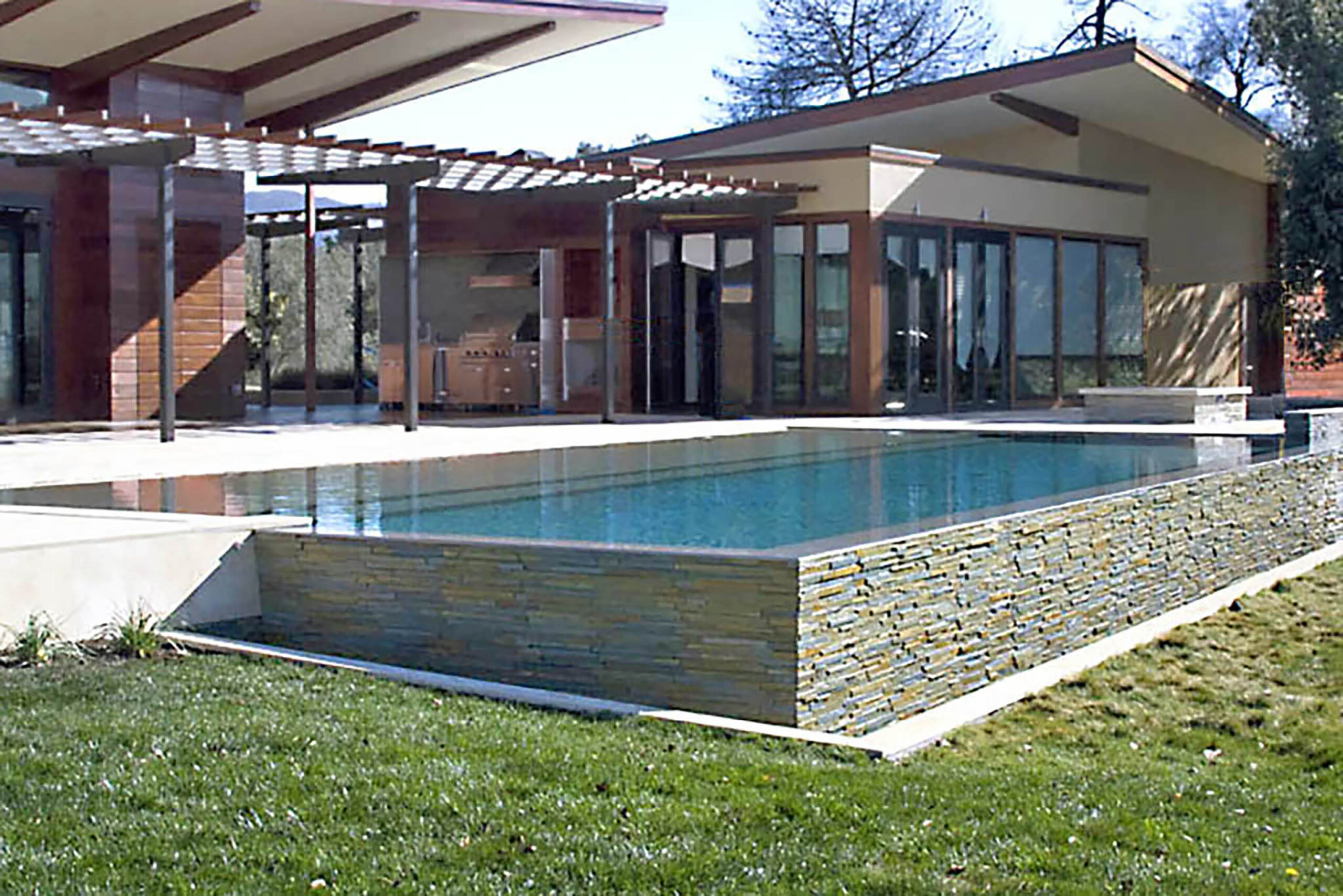
Cantilevered coping, where concrete deck or pavers overhang the swimming pool, presents mastic joints and expansion worries. Right here, appropriate Deck‑O‑Seal or comparable joint sealer is not aesthetic. The ceramic tile underlayment need to quit at a defined side, with a clean space for the sealer between the deck and the tile or bond beam of light. Do not bury that joint in cement. It requires room to relocate so the floor tile is not sheared or tented when the deck expands.
All of these user interfaces share one policy: make a decision the finished elevations and discloses theoretically and string prior to you mix any mud. It is much easier to adjust the density of the underlayment, or grind a little bit extra off the bond beam, than to deal with a visible 3/8 inch difference in between tile and coping after whatever is set.
Step by step series that in fact works
Every crew has its own flow, however the effective ones comply with a framework comparable to this.
Assess covering honesty, execute required gunite or shotcrete repair service, confirm pipes with a swimming pool plumbing stress examination where suitable Scarify and clean the substratum, integrating mechanical preparation with selective acid etching and a controlled muriatic acid wash, after that allow the covering completely dry Repair cracks, skimmers, and swimming pool light niches with hydraulic concrete or non diminish mortar and rebuild the pool bond beam where coping will certainly rest Install cementitious ceramic tile underlayment, using a bonding slurry and carefully rodded float layers to real walls, actions, and the waterline aircraft Apply a suitable waterproofing membrane layer, after that established waterline tile with appropriate thinset, preparing for cement joints, cement color matching, and motion joints at coping and deck changesThe specific items will differ, but the logic of the sequence does not change much. Framework initially, then account, then water-proof, after that tile.
Working with different indoor finishes
The relationship in between floor tile underlayment and the last interior surface usually gets disregarded until the eleventh hour. That is exactly how you wind up with a proud floor tile lip catching toes or a visible ridge where plaster fulfills tile.
PebbleTec and comparable exposed pebble finish products show up somewhat honored because of the accumulation. Quartz accumulation surface systems sit somewhat smoother and closer to conventional plaster. Hydrazzo brightened marble surfaces are relatively exact in thickness, while Ruby Brite and lots of white line plaster systems have their very own ranges.
When you construct your underlayment, you ought to currently recognize which surface is coming, and to what density. A regular method is to terminate the underlayment at a deepness such that, after indoor coating, the top of the plaster or pebble surface sits simply under the reduced edge of the waterline tile. That develops a tidy shadow line and maintains the interior surface from feathering to nothing at the floor tile, which can result in chipping.
Communicate with the plaster team. If they recognize you have floated the shell to a particular referral, they can adjust their density near the ceramic tile as opposed to improvisating. Over end pools with glass mosaic floor tile and really level waterlines, that partnership is the distinction between a smooth look and a visually noisy edge.
Grout, sealant, and the information that show craftsmanship
By the moment you reach cement, all the heavy job is done, however the information still matter. Grout color matching is just one of those quietly essential options. With a rough underlayment and out of plane ceramic tile, you typically see grout joints utilized to conceal disparities. With an effectively prepared substrate, joints can be regular and slim, which lets you match cement to tile or water color for a tranquil appearance rather than a patchwork.
Choose cement suitable with continuous immersion, and respect remedy times prior to loading the swimming pool. Similarly, choose sealers for expansion joints that bond well to your waterproofing membrane and underlayment sides. Deck‑O‑Seal and similar products have years of record in pool mastic joint substitute for a reason, however they still depend on tidy, correctly sized joints and backer rod to move correctly.
Pay attention near fittings and devices. Around returns, drains pipes, and lights, make certain the joint in between tile and fitting is backed by solid underlayment or patch product, not hollow pockets. Soft silicone or pool‑grade sealer at that last interface is great, however it needs to not be the only thing quiting water migration.
Common shortcuts and why they cost more later
People do try to conserve cash by skipping actions. I see a few patterns over and over.
The first is bonding directly to harsh gunite with a thick bed of thinset as opposed to a true float layer. It usually creates lippage, inconsistent grout joints, and random hollow spots. On glass mosaic ceramic tile, it is aesthetically ruthless. On even more forgiving ceramic, it might look passable for a few years, but the irregular bond and thickness return as split tiles or efflorescence.
Another faster way is ignoring architectural concerns like plaster delamination or broken skimmer throats. Underlayment over loosened material relocations separately from the shell. Also if the ceramic tile holds on, you invite water behind the system. That brings about staining, freeze damage in cold environments, and costly tear outs.
The 3rd is treating waterproofing as optional behind waterline ceramic tile, especially in older coverings. It may be optional on a structurally best, low permeability shell in a mild environment. A lot of jobs are not that fortunate. A good waterproofing membrane is low-cost insurance policy compared to the cost of retiling and fixing water damage at the bond beam.
When you contrast the price of doing it best to the price of repairing it, the mathematics is not refined. A detailed underlayment and membrane pool remodeling layer system may add a couple of dollars per square foot. A failing that calls for demolition of tile, grinding back to seem product, brand-new underlayment, and retile can conveniently be ten times that.
Bringing it together
Installing tile underlayment over rough gunite or shotcrete is not extravagant work. Nobody articles images of a scarified shell or a perfectly rodded float layer. Yet those are the things that let travertine coping sit dead degree, allow waterline tile track the water without a wiggle, and allow a Hydrazzo or exposed pebble finish die easily right into the floor tile edge.
If you approach the work as a system, from swimming pool shell prep and substrate scarification, with hydraulic cement repairs, cementitious underlayment, waterproofing membrane layer, and finally ceramic tile and cement, the outcomes are foreseeable and resilient. Ignore any of those layers, and the pool has a means of reminding you, usually at the home owner's expense.
Good swimming pools look basic when they are filled up. They only look in this way since someone did the complicated parts out of sight, one mindful layer of cement and waterproofing at a time.